
From Pyongyang to Brasília: three SOAS alumni on life as a diplomat
Ambassadors marry couples in embassy buildings, talk their way past airport checkpoints and keep a "trust bank" that can pay out years later. Three SOAS alumni take us behind the scenes.
With elections coming up this autumn in the United States and beyond, we hear a lot about whether we can trust our leaders. Much less is said about the people whose job is to build trust between countries, far from the cameras.
SOAS has been preparing people for that work for decades. Its Centre for International Studies and Diplomacy, founded in 2000, runs the MA International Studies and Diplomacy and the online MA Global Diplomacy, and SOAS is ranked 16th in the world for Politics (QS 2026). Many SOAS alumni now work in diplomacy around the world.
We spoke to three of them. Their stories range from Iran to Lagos to Pyongyang, but they agree on one thing: trust is built slowly, person by person.
Stephanie Al-Qaq
HM AMBASSADOR TO BRAZIL
Stephanie Al-Qaq CMG has been the UK's Ambassador to Brazil since 2022. She was previously the UK's Iran Envoy.

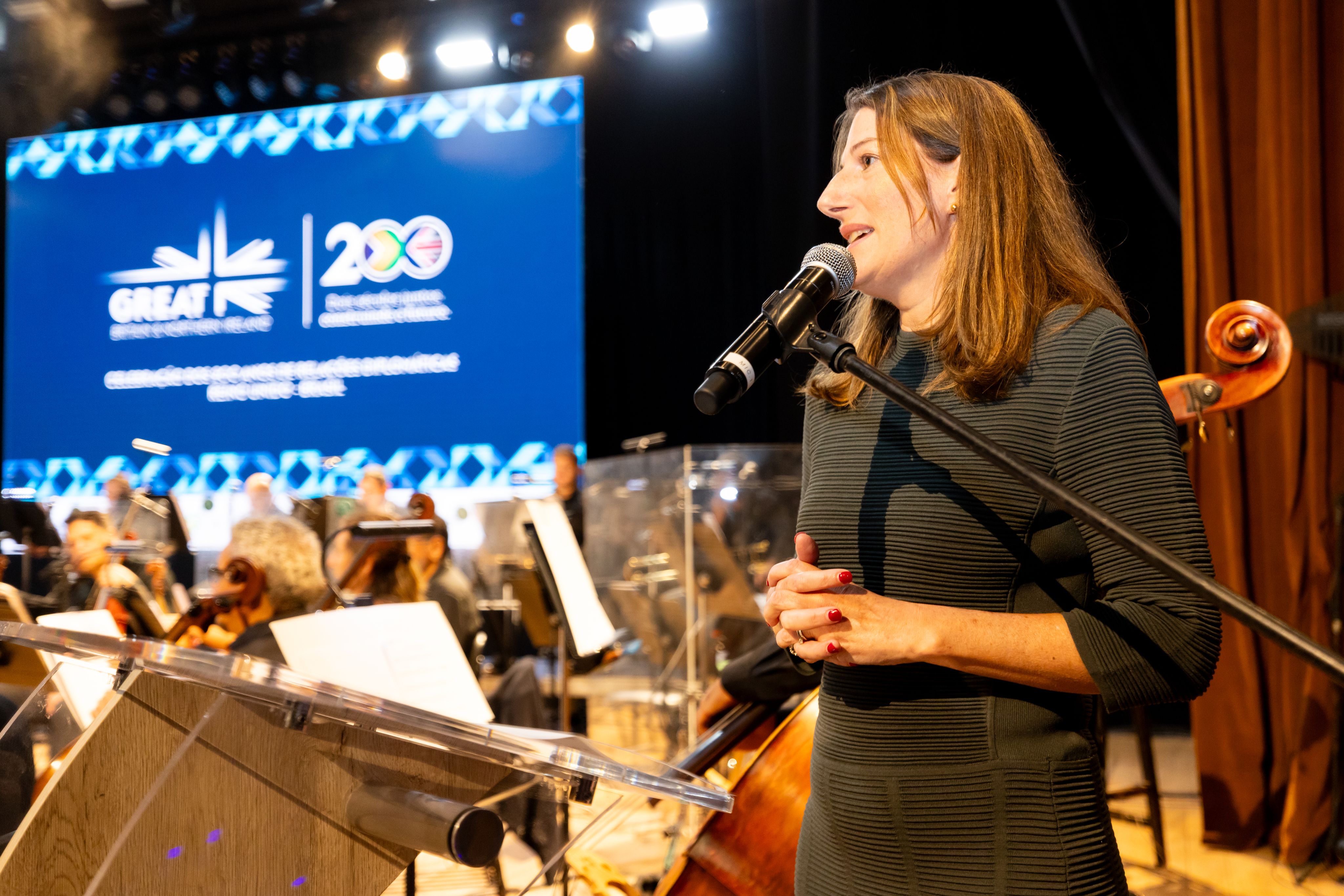
A speech during the celebration of 200 years of diplomatic relations between the UK and Brazil in Brasília.
A speech during the celebration of 200 years of diplomatic relations between the UK and Brazil in Brasília.
Brazil goes to the polls this month. What is election season like for an ambassador?
In the run-up to elections, there's a lot of monitoring of the opinion polls and speaking to the different candidates and their teams. Once you get very close to the election, there's nothing for you to do but sit back and watch. Brazil's elections are incredibly quick, because it's electronic voting. Back in 2022 my children asked, "Can we stay up and watch the outcome?" thinking it would be like the US or the UK. By 10pm it was done. They were very disappointed.
How did you get into diplomacy?
When I was at SOAS, I was working at Amnesty International to fund my studies, and I stayed in the NGO sector for a few years. Then I thought: how do I actually change policy? So I joined the civil service. In my mind, I was only going to stay five years. But I love public service. I joined to make a difference.
What is a typical day as an ambassador?
There isn't really one. In the morning you could be with one of the oldest indigenous leaders, Chief Raoni, talking about how you protect indigenous lands, and in the afternoon you can be talking to an incredibly innovative AI firm. One thing people often don't know is that people come and get married in our buildings. They turn up in their lovely frocks and their suits, and we actually marry them.
What surprised me most in this role is the public scrutiny. Now you can get your picture snapped at the most inopportune moment. It's never a good idea, even on holiday, to go to the airport in your joggers.
Brazil is central to the climate debate. How does that come into your work?
Brazil has a very critical role to play in climate and nature, with massive amounts of forest and biodiversity. It held COP30 last year in Belém, and we're actually Brazil's second-largest partner in this space in financial terms.
We have the largest scientific project in the tropical rainforest in Brazil. It's called AmazonFACE. It is like a crystal ball: it injects CO2 into the forest and tells you how the forest will respond.
The current Foreign Secretary, Ed Miliband, has been involved in this subject for a very long time. I remember taking him on a tour of Brazil about 15 years ago, to the Xingu River, to see the destruction of the way of life of the indigenous peoples there.
Climate change and AI weren't at the top of the agenda when I joined. This career evolves all the time.
How do you build trust when countries' interests compete?
That is ultimately the art of diplomacy. Diplomacy is always a compromise. I was involved for many years in the Iran negotiations, including to get British nationals released who are arbitrarily detained by Iran. You are coming from a place where there is no trust.
Anyone who knows me will tell you: I never go into a meeting with notes. It's very important to spend time understanding where your counterpart is coming from, and where they have flexibility. I learned this early, in the NGO sector, going with a famous Filipino negotiator to Mindanao and spending days building trust between two factions.
It's also being very honest. Many people find it difficult to say no, and you can quickly break trust if you say, "Yes, maybe we could do that," and then you can't deliver.
"I never go into a meeting with notes."
What are the skills you learned at SOAS that have been most useful in your diplomatic career?
I remember very heated, passionate debates in class, and, at first, I felt very uncomfortable. But I became increasingly comfortable, and now I feel comfortable with discomfort in a way that many diplomats don't. I consider it a sort of superpower. The understanding that comes from SOAS of the way people view the world enables you to put yourself in somebody else's shoes when they're coming to you with a problem or an issue.
Is there a moment that showed you why the work matters?
I was leading the operation to repatriate the brother of the Manchester bomber from Libya. It was one of the most complex things we had done, and every process had to be followed so that his prosecution could go ahead. There was a moment of thinking: how do we make the journey back as comfortable as possible, to avoid any problems? I remember thinking back to somebody who'd been in my class at SOAS, and it made me think differently about how to approach it.
I remember the moment he landed in the UK, and I signed the paper and handed him over to the police: the only person who has ever stood trial for killing and injuring all of those people. We were happy that we'd done something so that those people would have some peace, even though they're never going to get their loved ones back.
" We were happy that we'd done something so that those people would have some peace, even though they're never going to get their loved ones back."
What advice would you give to someone considering a career in diplomacy? And despite today's international challenges, do you remain optimistic about the future of global cooperation?
Don't let a sense of being different hold you back. If you're wondering whether it's only for certain types of people, it isn't. If you think you can make a difference, go for it.
SOAS is the perfect place to test whether you enjoy working with people from different countries and cultures. If you find that exciting, diplomacy may well be for you.
It's also important to understand that diplomacy isn't about travel or glamorous receptions. It's hard work, often involving long hours and difficult situations. But it can also be incredibly rewarding.
As for optimism, what is the alternative? Yes, the challenges are significant, and progress can be frustratingly slow. But diplomacy remains the way countries resolve disagreements and find solutions.
I remember the G20 in Brazil, where there had been no joint statements for several years because of divisions over Ukraine. Yet, through patient diplomacy, agreement was eventually reached. That's how progress often happens: incrementally rather than dramatically.
I believe there should be more diplomacy, not less. The world needs people who are prepared to step forward, work across differences and help find solutions. It isn't easy, but it remains one of the most powerful ways to make a positive impact.
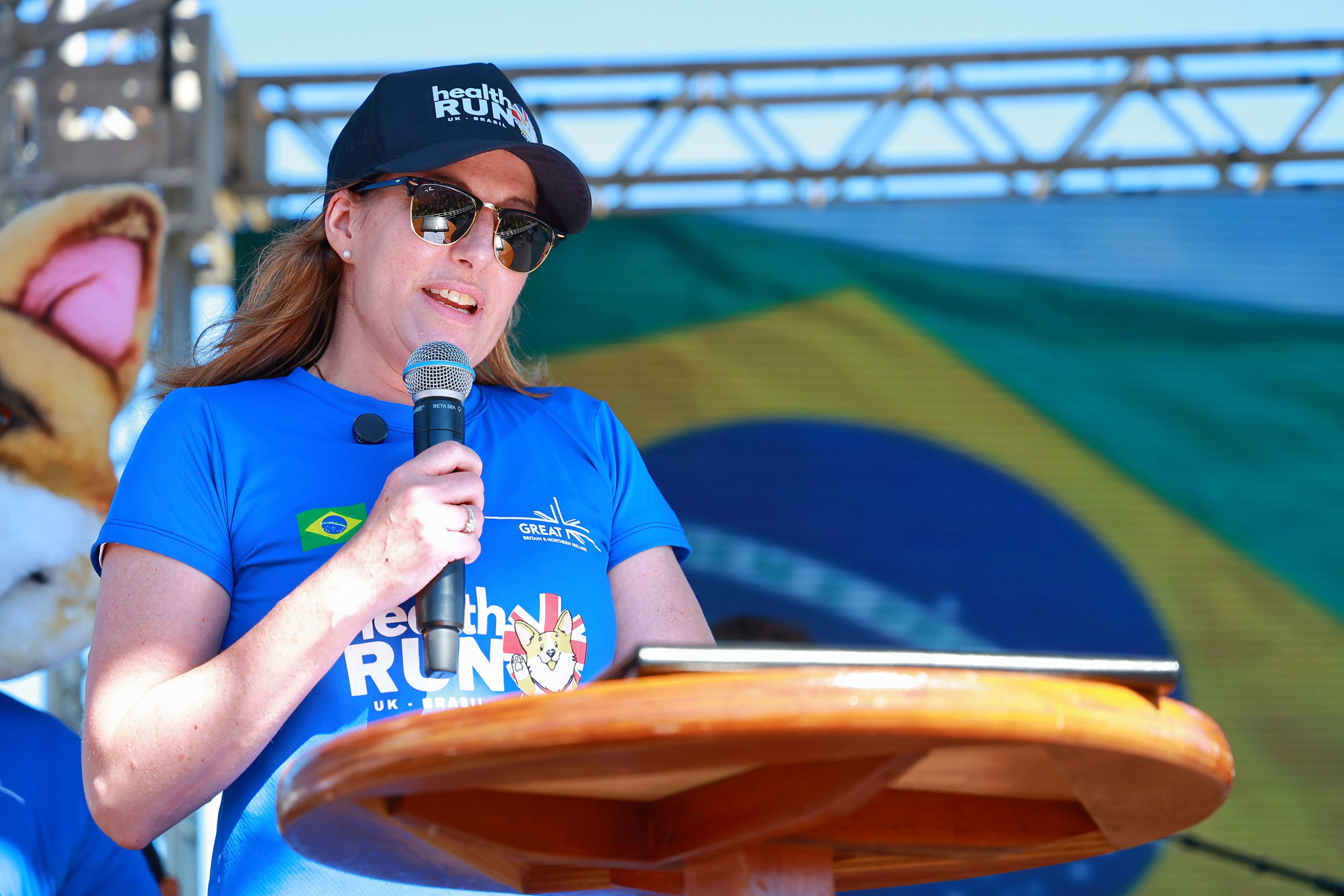

Ambassador Al-Qaq addresses an audience of over 5,000 people following the Health Run, organised by the British Embassy in March 2026 on the Esplanade of Ministries in Brasília.
Ambassador Al-Qaq addresses an audience of over 5,000 people following the Health Run, organised by the British Embassy in March 2026 on the Esplanade of Ministries in Brasília.
Scott Riswold
US DIPLOMAT, CURRENTLY POSTED IN MANILA
Scott Riswold has served for 21 years in nine countries, including two postings in Africa and four in Asia, as well as London and Afghanistan.

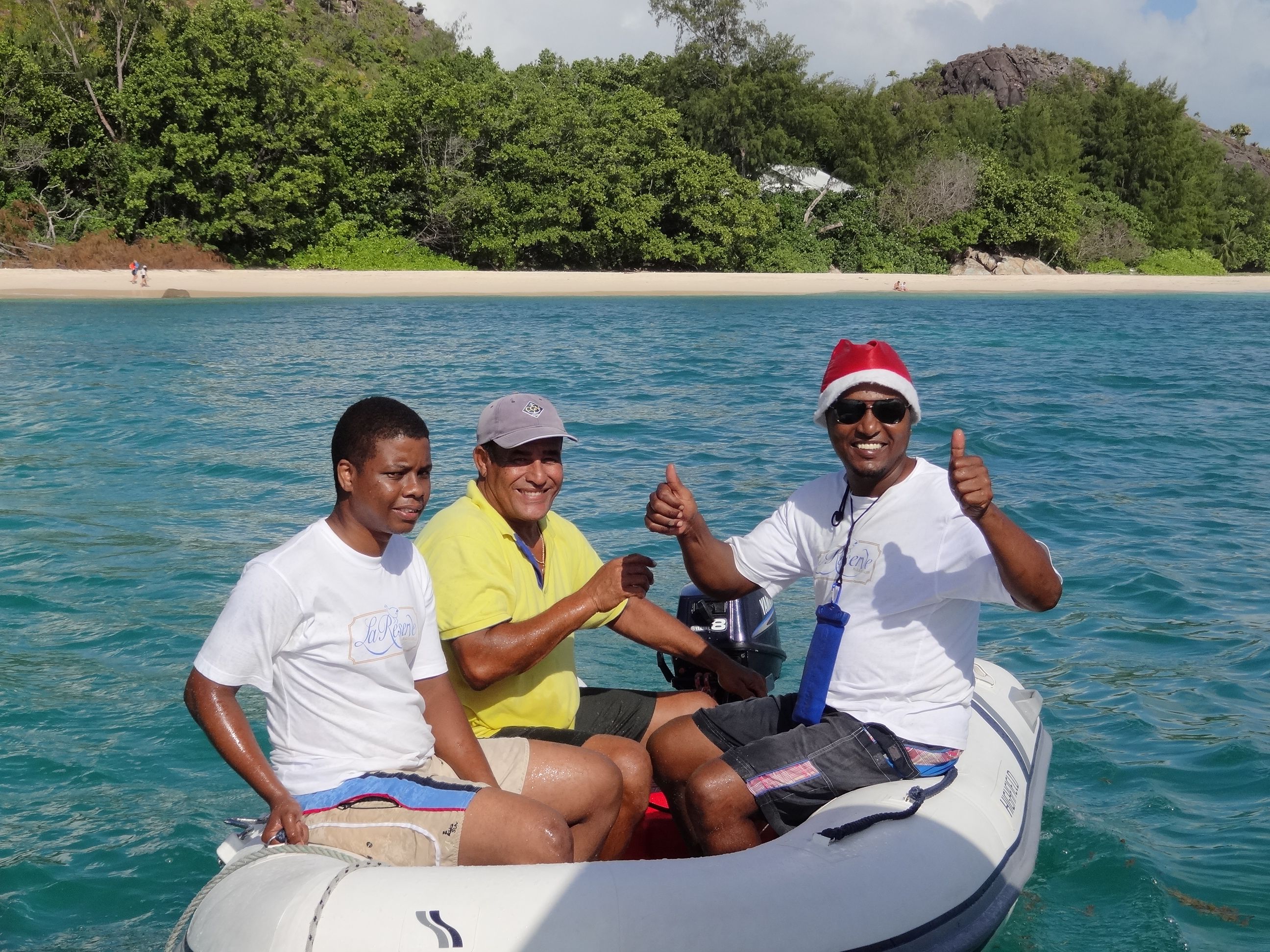
Local fisherman going for a daily catch for the holidays in Fiji, 2011
Local fisherman going for a daily catch for the holidays in Fiji, 2011
Why did you choose the diplomatic career?
I grew up in the middle of the United States with absolutely no diversity and no international travel. But my sister and I would spin the globe endlessly, stop it with a finger and say, "I want to live there." For some reason, I was inspired to travel the world.
I also learned by osmosis, watching my father. He had all these soft skills, all the emotional intelligence. He could walk into a room and light it up. He would treat everybody equally, whatever their status. He was making me do that when I was five years old.
I stumbled through my 20s, working in hospitality, and made it to SOAS at 27, on a lot of borrowed money, with no idea what I wanted to do. I did a MSc Economics focused on Africa, and I think that's what sealed the deal with the recruiter. For me, SOAS was the ticket into diplomacy.
My first posting was Lagos. In my training course, I was essentially the only one to raise my hand and say, "I'll go to Africa." I've always signed up for the jobs nobody wanted and frankly these are the best jobs.
"I would not have a 20-plus-year career in nine countries if it wasn't for SOAS."
How do you build trust with people from very different backgrounds?
Be interested, not interesting. Skilled diplomats may say very few words in a conversation, because they're interested in the other person. Authenticity is key.
I've always had a unique local name everywhere I've been. If I throw it out and we both start laughing, that's an instant connection. My kids are adopted: my son is Ethiopian, my daughter is Chinese, and my wife is English. In Beijing, people would stop in their tracks, because they couldn't compute how a Chinese girl was with this family. As soon as I said in Chinese that she's adopted, it was an instant connection.
Can you give an example of trust paying off?
We deal a lot in reciprocity, both formally and informally. Can you do someone a favour before you ask for one? You may not have an ask for two years. Then it's, "Both of our leaders are coming at the same time. Can we coordinate?" You've already paid it forward, you have put coins in the trust bank.
Say in Lagos, I work closely with partners from other countries on a project. A couple of years later, one of these diplomats is another location, meets with the Embassy in that location and says, "We had such a great relationship with your team in Lagos. We'd love to work with you." The world is a small place.
"You've put coins in the trust bank."
What do people misunderstand about diplomacy?
It's not like the movies. All the hard work is done before the photo op, well before you see the leaders signing documents, by people like me. You may have diplomats who genuinely have a working relationship, and you would never know that from reading the news. It's the same in politics: you think they’re bitter rivals, but they're probably hanging out on Sunday having a barbecue.
And you need strategic patience. There aren't a lot of quick wins in diplomacy, and a lot of it you can't measure. There is no formula. The absence of something may be good news. You may never know the extent of what you delivered, which is okay. Being comfortable with ambiguity is key. It's a life of service and most diplomats are not looking for recognition or spotlight.
What is your advice for graduates?
Take the risk and filter out the noise. If I tell colleagues I want to go to a hardship posting, the majority might say, "Really? Why? You have a family." Then I ask, "Have you been there?" "Fifteen years ago." Noted. "I went for a week." Noted. "I've never been, but I've heard..." Thank you very much. Find the person who recently left, and they'll give you the ground truth. You must take different pieces of advice from different people and make your own decision. Trust your gut and have the correct mindset to take the leap.
You can't necessarily plan the career. Jobs pop up all the time in unique locations. Sometimes timing matters. Other times there are few others who want to take on a challenging assignment at a given point in their career. Sit back, buckle up and enjoy the ride.
Most importantly, be proud of your SOAS degree. It is a huge asset. You may not realise it for several years but leverage it. Embrace your uniqueness.
What makes you hopeful?
The famous Singaporean diplomat Kishore Mahbubani said: AI is not going to replace human-to-human interaction. We're going to need it more than ever. We're going to need people who can have those face-to-face discussions across cultures, regardless of politics, even with adversaries. No computer system, no AI, is going to do that. And I think SOAS is such a natural laboratory for that curiosity. I'm very optimistic.
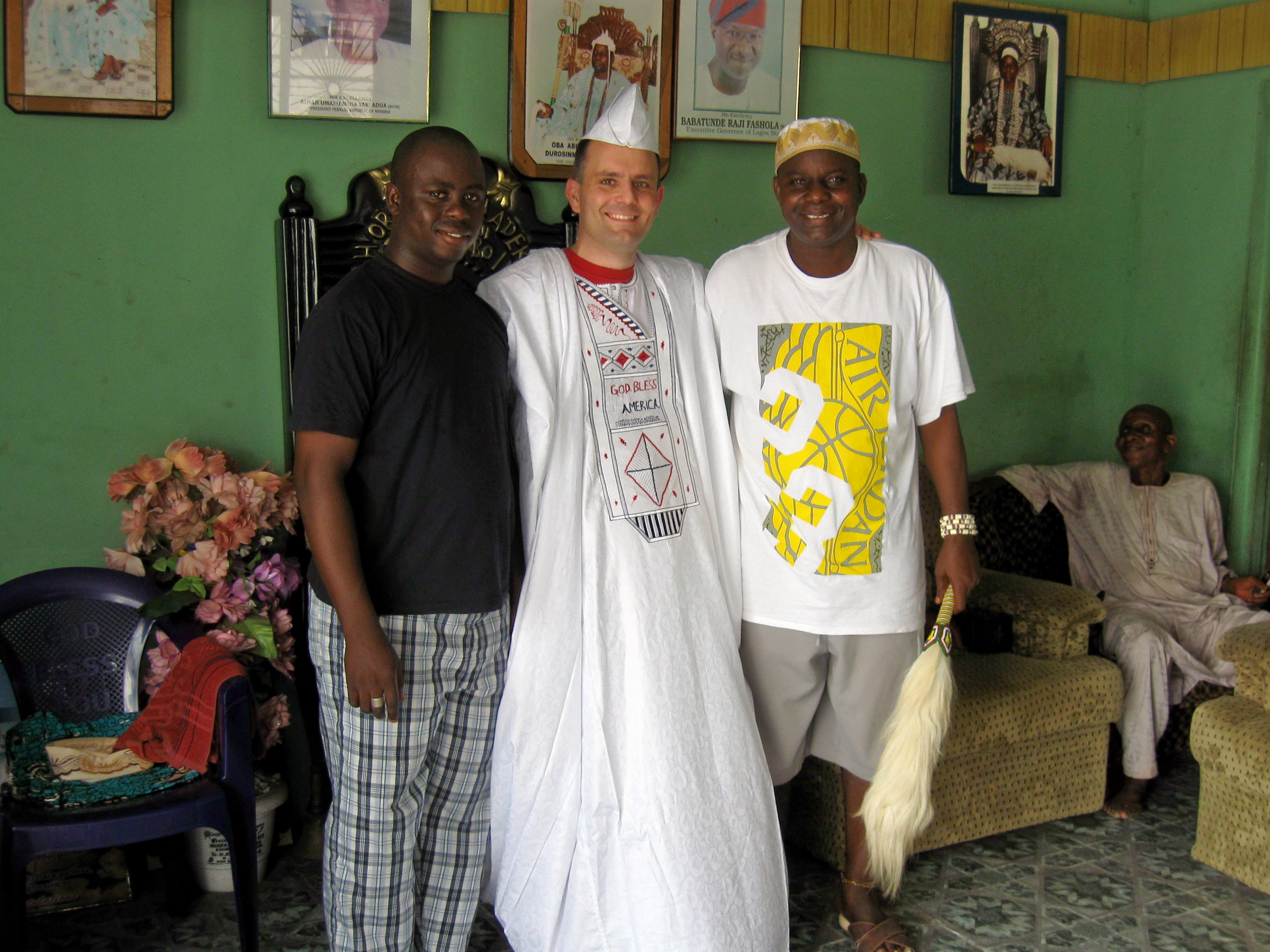

Local Village King and Prince presented a gift of clothing upon Scott's departure. Lagos, 2009
Local Village King and Prince presented a gift of clothing upon Scott's departure. Lagos, 2009
Jim Hoare
FORMER BRITISH CHARGÉ D'AFFAIRES IN PYONGYANG
Dr Jim Hoare OBE joined the Foreign Office as a research analyst after his SOAS PhD. He served in Seoul and Beijing, and in 2001 went to Pyongyang as chargé d’affaires to lay the groundwork for Britain’s first embassy in North Korea. He later taught at SOAS.

Jim Hoare in Pyongyang, June 2002
Jim Hoare in Pyongyang, June 2002
How did a historian of Japan end up opening Britain's embassy in North Korea?
Despite many, many job applications, I failed to get a university job. Wanting to use my expertise, I joined the Foreign Office Research Department and, despite my Japanese background, mainly worked on China for the first 10 years. It took me until 1971 to submit my PhD, and until 1994 to finally publish it.
In January 1981, just a few days after we had moved house, I got a phone call asking whether I would be interested in a posting to Seoul. So, in June, instead of going on a planned holiday, we went to Korea. Then came Beijing, as consul general, and the events of 1989. When things were still tense that autumn, I was once ordered off our balcony at gunpoint. When I left, the ambassador's final report noted that while I had only minimal Chinese, I had a much greater knowledge of things Chinese than the rest of the staff.
In 2001 I was asked to go to Pyongyang as chargé d'affaires, ambassador in all but title. There were only two of us at first. When we left in October 2002, we left a working embassy for the first ambassador. In retirement I taught a course on North Korea at SOAS, and in 2025 I received an OBE for services to British interests on the Korean Peninsula.
"I was once ordered off our balcony at gunpoint."
What has a career in Asia taught you about trust?
You hope there will be trust, but you can't always rely on it. Diplomacy is often mocked as gin and tonics on the balcony, but that's the way you get to know people and establish a relationship with them.
As a diplomat, your job is also to present your country's case. Whether you think it's a good case or a bad case, in a sense, doesn't matter.
When we established relations with North Korea in 2000, we raised our secure communications. The North Koreans said, "Yes, yes, there's no problem." Until I got to Pyongyang, where I was told, "You can have a fax and an unclassified telephone. Our rules are different."
Right at the end of my time there, I took aside the head of the European department and said that if they did not agree, I would recommend that we close the embassy. I trusted them to convey that message. About a week later I was pulled aside at a party and told, rather grudgingly, "You can have your communications." It was a bit of bluff on my part. Bluff can sometimes be as important as trust.
"Bluff can sometimes be as important as trust."
You also tell a story about trusting yourself.
When we were in South Korea, we used to go to Japan to collect the diplomatic bag, a sealed sack of secure communications. My wife, also a diplomat, would accompany me. Once we took our daughter, who was three or four and had her own passport. Coming back through passport control after three days, they said, "This child has never been checked in. There's no sign she's entered the country, so she can't leave."
I said to my wife, "Trust me." I went back and said to the man at the desk, "I am a diplomatic courier, and my duty is to go back to Seoul with this diplomatic bag. We will leave the child here with you, and you can look after her until we can make arrangements." We walked away towards the plane. Suddenly, "Come back, come back!" They had discovered they could turn back their date stamp, and stamp her in and stamp her out.
Sometimes you have to trust your judgement.
How did SOAS shape your career, and what advice would you give to graduates interested in diplomacy?
SOAS played a crucial role in my career. Completing a PhD there taught me two invaluable skills: how to write clearly and how to conduct rigorous research. Learning how to gather, analyse and communicate complex information proved essential when I joined the Foreign Office, particularly in research and analytical roles focused on East Asia.
My studies also gave me a deep understanding of the region and its history, which was highly valued during my postings in China, South Korea and North Korea. Beyond that, SOAS continued to support me throughout my career, from a junior fellowship that enabled me to complete my doctoral research to later opportunities as an Honorary Research Fellow and lecturer. Much of my professional and academic work can be traced back to the foundation I built at SOAS.
Diplomacy offers the chance to live and work abroad, engage with different cultures and make a meaningful contribution. SOAS provides an excellent foundation because it exposes students to different societies, languages and perspectives. Those experiences are invaluable for anyone considering a career in international relations or diplomacy.
What inspired you to leave a gift in your Will, and what impact do you hope your legacy will achieve?
My long-standing support for SOAS stems from a deep sense of gratitude. I was fortunate to benefit from higher education at a time when my studies were fully funded, and when additional support was needed both Queen Mary and SOAS helped me continue my academic journey. Supporting students through regular giving, and choosing to leave a gift in my Will, is my way of helping future generations access the same opportunities that had such a profound impact on my own life and career.
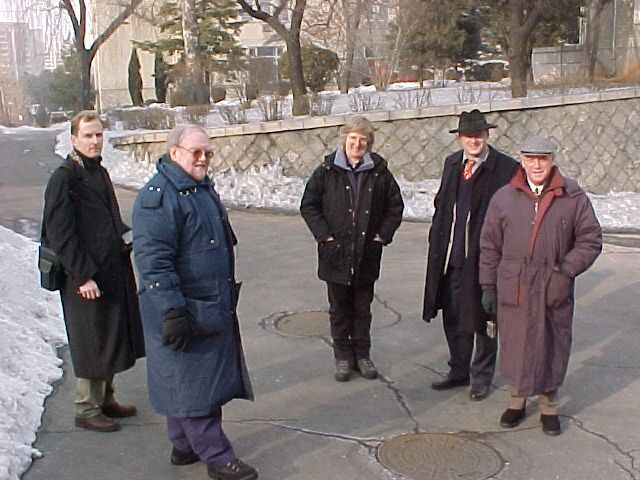

A visit to North Korea as charge d'affaires with the Foreign and Commonwealth Office team
A visit to North Korea as charge d'affaires with the Foreign and Commonwealth Office team
Keep reading
Maro Itoje: lifting others, from the line-out to the classroom
England and British & Irish Lions captain Maro Itoje studied Politics at SOAS while starting his professional rugby career. He talks about his experience at SOAS, his philanthropic projects in the UK and in Lagos and the three things he believes every leader needs to earn trust.
Hard to earn, easy to lose: SOAS academics discuss how to build trust
Why do voters trust some leaders and not others? Can you negotiate with someone who lies to your face? SOAS professors Nick Westcott, a former diplomat, and Emma Crewe, Head of the School of Anthropology, Media and Gender, explain how trust is lost and rebuilt.
Take part: volunteering, networking and scholarships
There are many ways to take part in the SOAS alumni community. Wherever you are in the world and whatever stage of your career you’re at, you can stay connected, share your experience and help shape the future of SOAS and its students.
 Built with Shorthand