
Maro Itoje
The captain of England and the British & Irish Lions on finding common ground, keeping promises and what SOAS taught him about leading people who don't think like you.
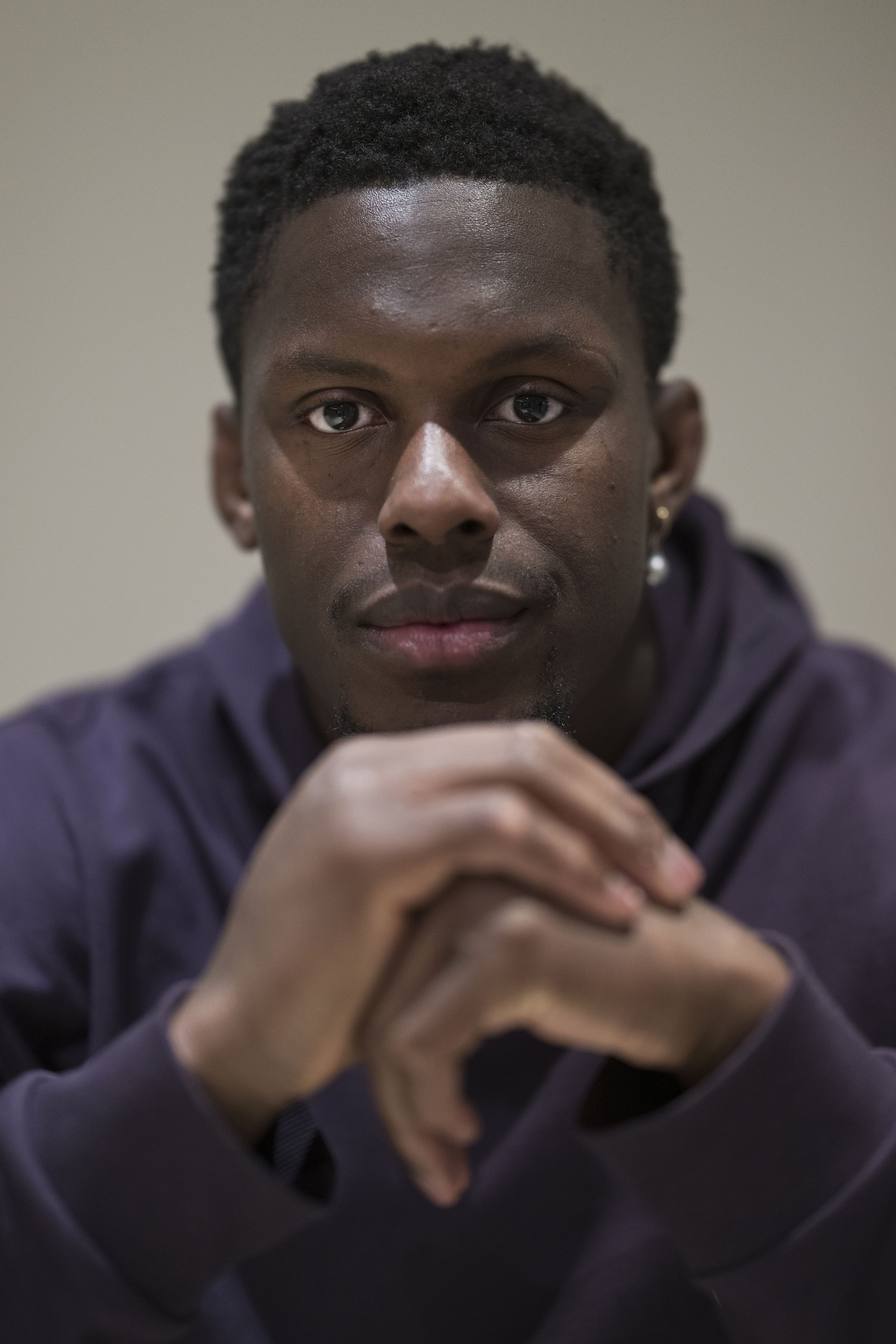
PMaro Itoje (BA Politics, 2016) is one of the most accomplished rugby players of his generation.
Born in London to Nigerian parents, he joined Saracens in 2012 and has since won multiple Premiership and European titles. He made his England debut in 2016 and now captains England, Saracens and the British & Irish Lions.
Off the pitch, he founded the Pearl Fund, which supports children's education in London and Lagos, and co-founded Akoje Gallery, which champions artists from the African and Caribbean diaspora.
He spoke to SOAS World about studying alongside professional sport, the promise behind his philanthropy and how trust is built, in a changing room or anywhere else.

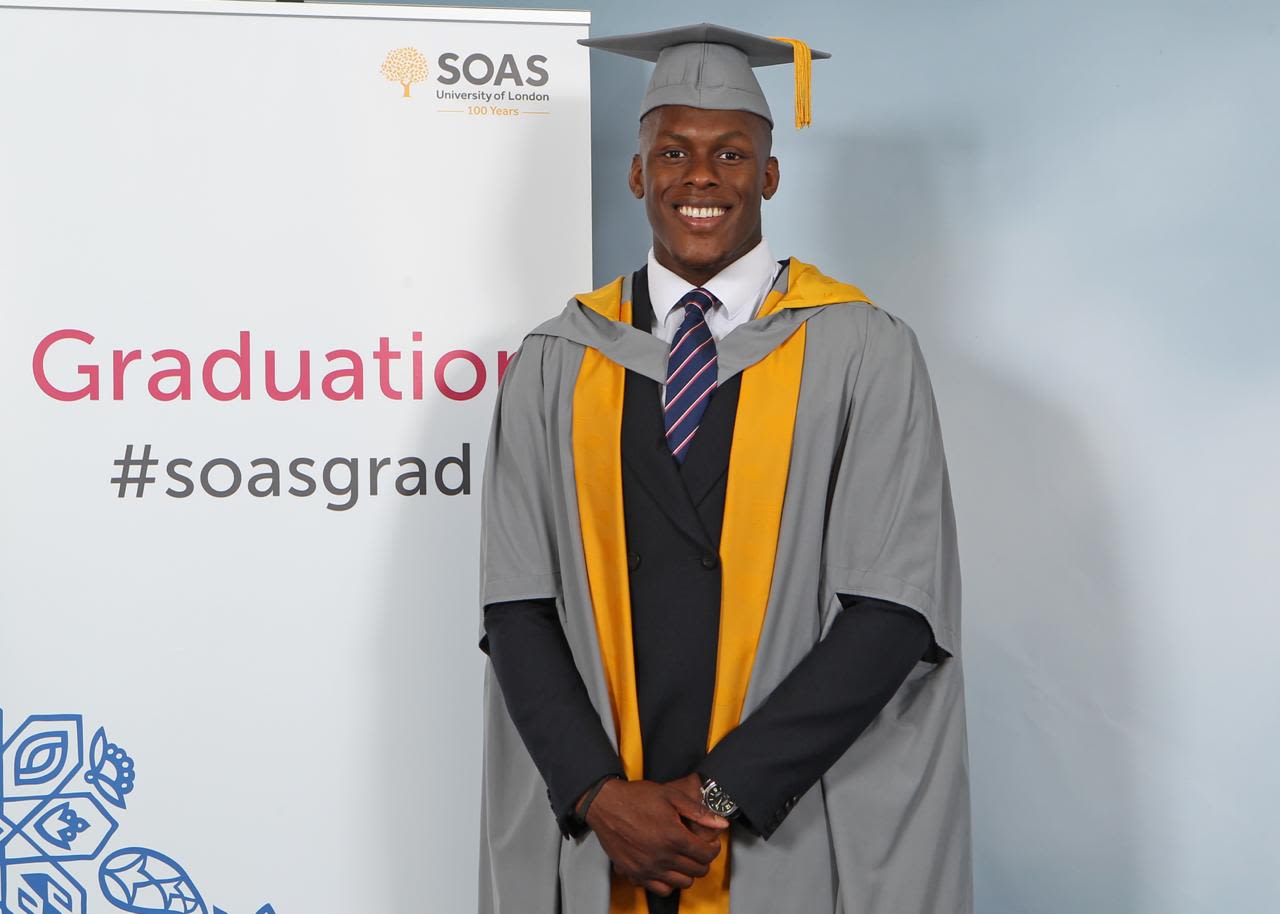
Maro Itoje graduated with a BA in Politics in 2016.
Maro Itoje graduated with a BA in Politics in 2016.

Why did you choose to study Politics at SOAS?
When I left school, I had just signed my first professional contract, and while I wanted to make the most of the opportunities rugby offered, education remained extremely important to me. Not going to university was never really an option.
Did SOAS influence your approach to leadership?
SOAS definitely challenged me. Before university, I attended Harrow School, which I would describe as a conservative environment in terms of politics and economics. SOAS was very different.
Moving between those two worlds taught me how to engage with people whose perspectives differ from my own. It challenged my thinking and helped me learn how to find common ground.
In my experience, there is almost always common ground to be found. The challenge is being willing to look for it.
My university experience wasn't typical, because I was balancing my studies with professional rugby. I didn't have as much time to socialise as many students do, but academically and intellectually it was extremely valuable.
"In my experience, there is almost always common ground to be found. The challenge is being willing to look for it."
As a captain, philanthropist and public figure, how do you build trust?
I think trust is built through a few key things. The first is showing people that you care. If your teammates know you genuinely care about them, they understand your actions come from a good place. The same principle applies in philanthropy, business and public life.
The second is consistency. People trust those who do what they say they are going to do. If someone repeatedly fails to follow through on commitments, trust quickly disappears.
The final element is competence. People build confidence in those who consistently perform and deliver. Whether it's sport, philanthropy or business, people need to know you are capable of doing what you've committed to doing.
"People trust those who do what they say they are going to do."
The Pearl Fund supports 40 children in Lagos. Why so few, rather than a much larger number?
In Lagos, we support 40 children living in extreme poverty. We don't simply pay school fees. We provide a complete support system that includes uniforms, meals, transport and extracurricular activities.
The Pearl Fund follows what I would describe as a "depth over breadth" model. I've seen many charities do excellent work, but sometimes the impact can be limited to the time a child is participating in a programme. What we are trying to create is life-changing impact.
Our promise is that we will support them throughout their educational journey. For many of these children, it represents years, and potentially decades, of support. We would rather support a smaller number of young people in a transformative way than spread our resources too thinly and risk failing to deliver on that promise.
Why education, and why art?
Education has always been incredibly important to me. My father worked in education and my mother was deeply passionate about it. Many people are denied access to quality education for economic or social reasons, but education remains one of the greatest social levellers we have. It's one of the greatest gifts you can give somebody.
"Education remains one of the greatest social levellers we have."

My interest in art developed later. What started as collecting became a genuine passion. African artists have historically received less visibility than many of their European or American counterparts, although that is beginning to change. Through Akoje Gallery and our residency programme, we're trying to create opportunities for artists to develop their practice and take meaningful steps in their careers.
You've spoken about a possible future in politics. What draws you to public service?
I'm concerned about social inequality, the growing gap between rich and poor, the cost-of-living crisis and broader questions of opportunity. Where you're born and where you grow up can still have a major impact on the opportunities available to you. I also think we need to keep addressing race, discrimination and bias.
Despite the criticism politics often receives, I still believe strongly in the UK's ability to do good. At its best, politics has the power to improve people's lives in a very tangible way, and that's something I find extremely compelling.

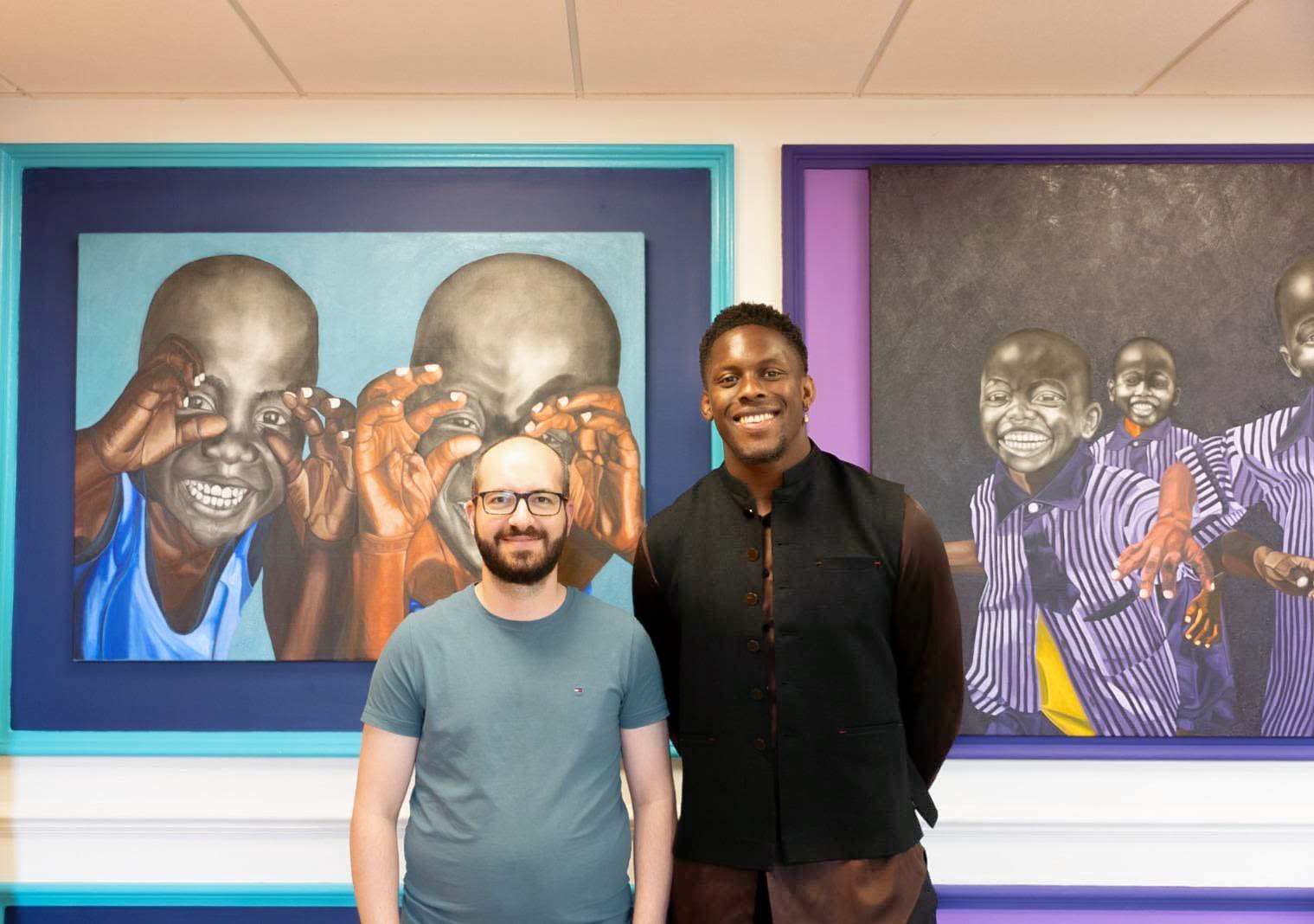
Maro Itoje and co-founder of Akoje Gallery Khalil Akar at the exhibition 'A Garden's Beauty Never Lies In One Flower'
Maro Itoje and co-founder of Akoje Gallery Khalil Akar at the exhibition 'A Garden's Beauty Never Lies In One Flower'

Maro's first visit to Platform College in Lagos in 2023 to launch the Pearl Fund
Maro's first visit to Platform College in Lagos in 2023 to launch the Pearl Fund
Oluwole Omofemi, Defender of Truth, Acrylic and Oil on Canvas, 2023
Oluwole Omofemi, Defender of Truth, Acrylic and Oil on Canvas, 2023
Keep reading
Photo by Alec Doualetas on Pexels
Photo by Alec Doualetas on Pexels
From Pyongyang to Brasília: three SOAS alumni on life as a diplomat
What does diplomatic work really look like, and how do diplomats build trust between countries? A British ambassador, an American diplomat in Manila and Britain’s first representative to North Korea share the stories behind the headlines and what they learnt at SOAS.
Hard to earn, easy to lose: SOAS academics discuss how to build trust
Why do voters trust some leaders and not others? Can you negotiate with someone who lies to your face? SOAS professors Nick Westcott, a former diplomat, and Emma Crewe, Head of the School of Anthropology, Media and Gender, explain how trust is lost and rebuilt.
Take part: volunteering, networking and scholarships
There are many ways to take part in the SOAS alumni community. Wherever you are in the world and whatever stage of your career you’re at, you can stay connected, share your experience and help shape the future of SOAS and its students.
 Built with Shorthand