
Hard to earn, easy to lose: two SOAS academics on trust
We asked Dr Nick Westcott, Professor of Practice in the Department of Politics and International Studies, and Professor Emma Crewe, Head of the School of Anthropology, Media and Gender, what trust really is and how it can be rebuilt.
WWhom do we trust, and why? Around the world, people are questioning their institutions, their leaders and the news they read. Social media has made it harder to tell what is really going on, and promises that are made and then broken leave a lasting mark. Yet trust is what allows governments to govern, negotiators to strike agreements and communities to work together.
We put the same questions to two SOAS academics who look at trust from very different angles.
Nick Westcott is Professor of Practice in the Department of Politics and International Studies. He spent nearly 30 years in the British diplomatic service, including as High Commissioner to Ghana, then served as Managing Director for Africa, and lor the Middle East and North Africa, at the EU's External Action Service, before directing the Royal African Society.
Emma Crewe is Professor of Social Anthropology and Head of the School of Anthropology, Media and Gender. She has spent years observing how Parliament really works, from the House of Lords to MPs' constituency surgeries, and works with civil society organisations around the world.

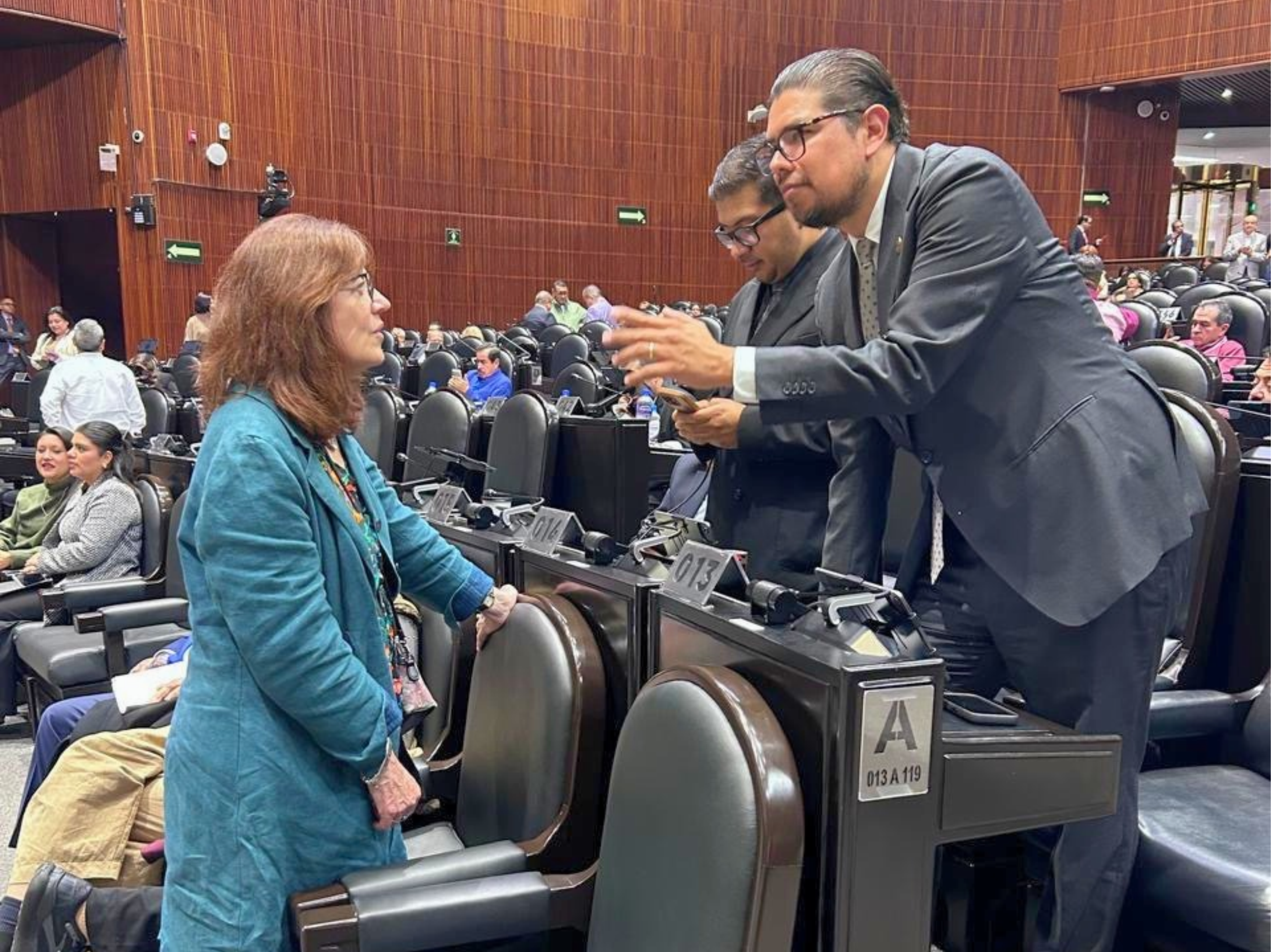
Professor Crewe with an MP in the Mexican parliament
Professor Crewe with an MP in the Mexican parliament

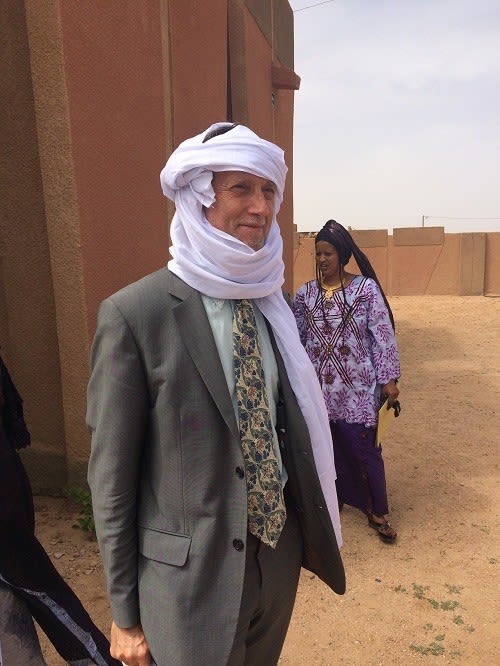
Professor Westcott in Agadez (Niger)
Professor Westcott in Agadez (Niger)
What is trust?
Emma Crewe: Like most interesting and complex concepts, trust eludes simple, universal definitions. Generally speaking, it is about whether people feel they can rely on each other. Are they dependable? Are they ethical? Have they lived up to their promises?
What that means in practice depends on what you're trying to do. To trust your teacher, you mainly want them to be a truth-seeker, and to be honest when they don't know something. For politicians, the most important aspect of trust is whether they honour each other's agreements. It's fine to say, "Sorry, I can't support your deal." But if you said you were going to, you can't break that and still be considered trustworthy.
Nick Westcott: It's very hard to do effective diplomacy unless you can build trust with the people you're negotiating with. It doesn't necessarily exist. It absolutely has to be built.
The classic example is the Oslo peace process between Israelis and Palestinians in the early 1990s, when trust was virtually non-existent. After spending time together, one Israeli participant reflected that, although they had extensively researched the Palestinians, they realised how little they truly understood them. It was only when conversations moved beyond politics to their children, their work and their views on life that genuine understanding began to emerge. From that foundation of human connection, a meaningful negotiating process could begin.
"[Trust] doesn't necessarily exist. It absolutely has to be built."
Can you do business with people you don't trust?
Nick Westcott: Sometimes you have to. I remember sitting in front of the Russian Foreign Minister, Sergei Lavrov, with Federica Mogherini, then the EU's High Representative. He was telling us lies about what Russia was doing in Syria. We knew he was telling us lies. He knew that we knew. But he still told them. He was making a point: this is the version of reality I am going to hold to, and that's what you have to deal with.
What you need to do then is make your position very clear and remain honest, even if the other side is not. While diplomats have a reputation for deviousness, my experience is that the more honest you are, the more effective you're going to be. You may know things you choose not to say. That's fine. But what you say should be true.
"The more honest you are, the more effective you're going to be."
In an election year, why do voters trust some leaders and not others?
Nick Westcott: People will trust somebody they feel is authentic. That's partly why a lot of people in America trust Mr Trump. Fact-checkers may challenge the accuracy of many of his claims, but to many people he sounds authentic. He says things in a common-sense way they can relate to. The other thing is to offer people something they want, in an honest way, so they believe you can deliver, rather than promising them the earth. You've got to be credible, so that people believe what you say.
Emma Crewe: There are many reasons why citizens distrust politicians. Some of it comes from betrayal: promises not kept, stories about bribes. But some of it is confusion. Who do we believe? Which reports should we take seriously, when the contest over what is really going on has become manic with social media? Overall, citizens tend to believe those they already trust. So, it's important that politicians communicate with integrity, and that people like academics explain how democratic politics works.
Once trust is lost, how can it be rebuilt?
Emma Crewe: I don't think trust is a commodity that is won or lost. It's more helpful to think about relationships. All over the world you hear the same refrain about politicians, "I never see their face."
One of the most remarkable things in British politics is MPs' work in their constituencies. I've sat in a big hall with maybe 200 constituents being seen in one day by a London MP and their staff, and they got into every case with the same commitment, even when the person wasn't necessarily a voter. People tend to absolutely love their own MP if that MP has really tried to help them, but hate politicians as a group when they're an abstraction.
So, trust tends to be rebuilt at a very local level. I know of a SOAS alumna working at Hackney Council who is training citizens to identify problems with services and co-design solutions with council officers. I'm also involved with a programme in southern Ethiopia, where a new civil society organisation is brokering a relationship with local government to restore services for 12,000 people who have had none at all for four years, partly because of conflict and distrust. In both cases, it only works if people deliver for each other and act with integrity.
At a national level, where leaders can't meet hundreds of thousands of citizens, communication becomes really important. It's fascinating to watch how quickly people have found the current UK Prime Minister Andy Burnham's style of communication more persuasive than his predecessor. He improvises for different audiences, trying to explain his intentions in a way that is intelligible to them.
"All over the world you hear the same refrain about politicians, 'I never see their face.'"
How do you build trust across cultures?
Emma Crewe: A common assumption, all over the world, is that you can trust people who seem similar to you. I would question that. Anthropology is very interested in finding the familiar in what at first seems unfamiliar.
When I'm doing research, particularly where, as a privileged white person, I can be quite intimidating. I start by talking about family, because kinship is something we all share. When I was doing research while pregnant, people would ask me about it, and I was delighted. Talking about childbirth was incredibly resonant, because everybody's got a mother. The sociologist Hartmut Rosa wrote a book about resonance, and I think seeking resonance in the face of difference is a really powerful move. If you nurture an intense curiosity about difference and commonality, which I think is at the heart of SOAS, life gets much more exciting.
In a world where trust is often being tested, is there anything that gives you hope?
Nick Westcott: Very much so, because humankind has an uncanny ability to overcome its problems. The problems are getting bigger, from climate change to AI, so you need to do more talking. The multilateral structures, like the UN, are not working as well as they need to, but they still exist, and eventually people will come back to them, because it's necessary to solve the problems.
One of the key lessons of diplomacy is that you always have to keep trying. The Norwegian who negotiated the Oslo agreement, Terje Rød-Larsen, said that a negotiation is 700 hours of grief and one hour of glory. Against all adversity, you must keep talking.
Emma Crewe: We are facing the most serious combination of crises in my lifetime, after a period of relative stability. And although it is very alarming, I do also trust humanity, particularly young people, to do whatever is needed. I think what is needed requires extraordinary imagination and creativity, and the overcoming of differences.
Rather than being fearful of difference, we need to embrace it. We need to love it, because we're not going to sort out climate change, chronic poverty or food insecurity, or enable people to feel more positive about migration again, unless we find these resonances across what seem like divides between people.
These leaders of South African NGOs I am working with have the most extraordinary commitment to trying to make things work better. There are hidden heroes across the world. They're just not so prominent.
"A negotiation is 700 hours of grief and one hour of glory."
One lesson about trust that every SOAS graduate should carry with them?
Nick Westcott: Trust is very hard to earn and easy to lose. So, persevere, be honest, understand, listen. That way you will build trust.
Emma Crewe: Don't distrust people just because they're different. Find resonance with people you think are different, and you'll find they're not as different as all that. If we don't learn to trust across what initially feel like divides, then humanity is in real trouble.
"Don't distrust people just because they're different."
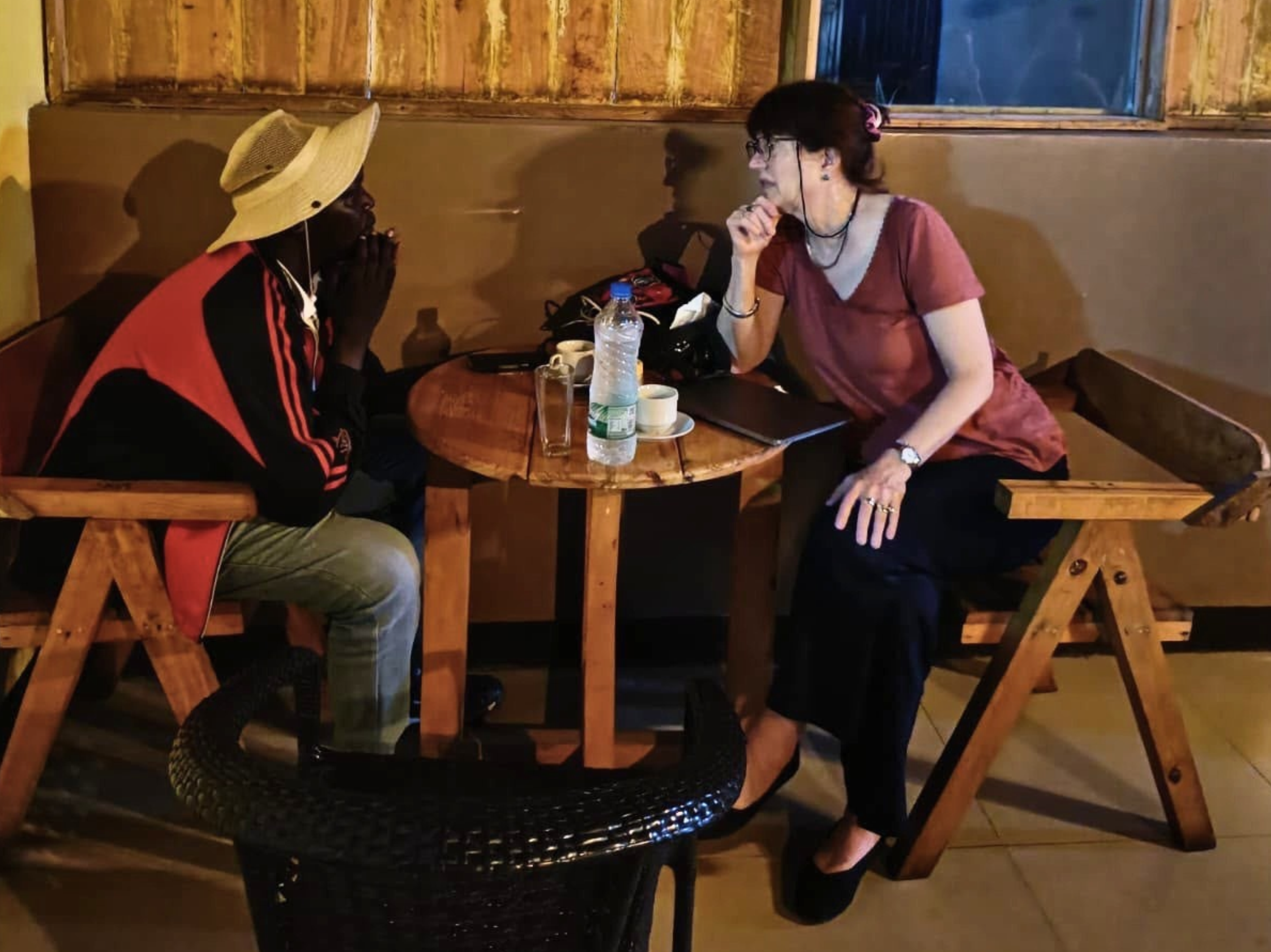

Professor Crewe in South Omo (Ethiopia)
Professor Crewe in South Omo (Ethiopia)

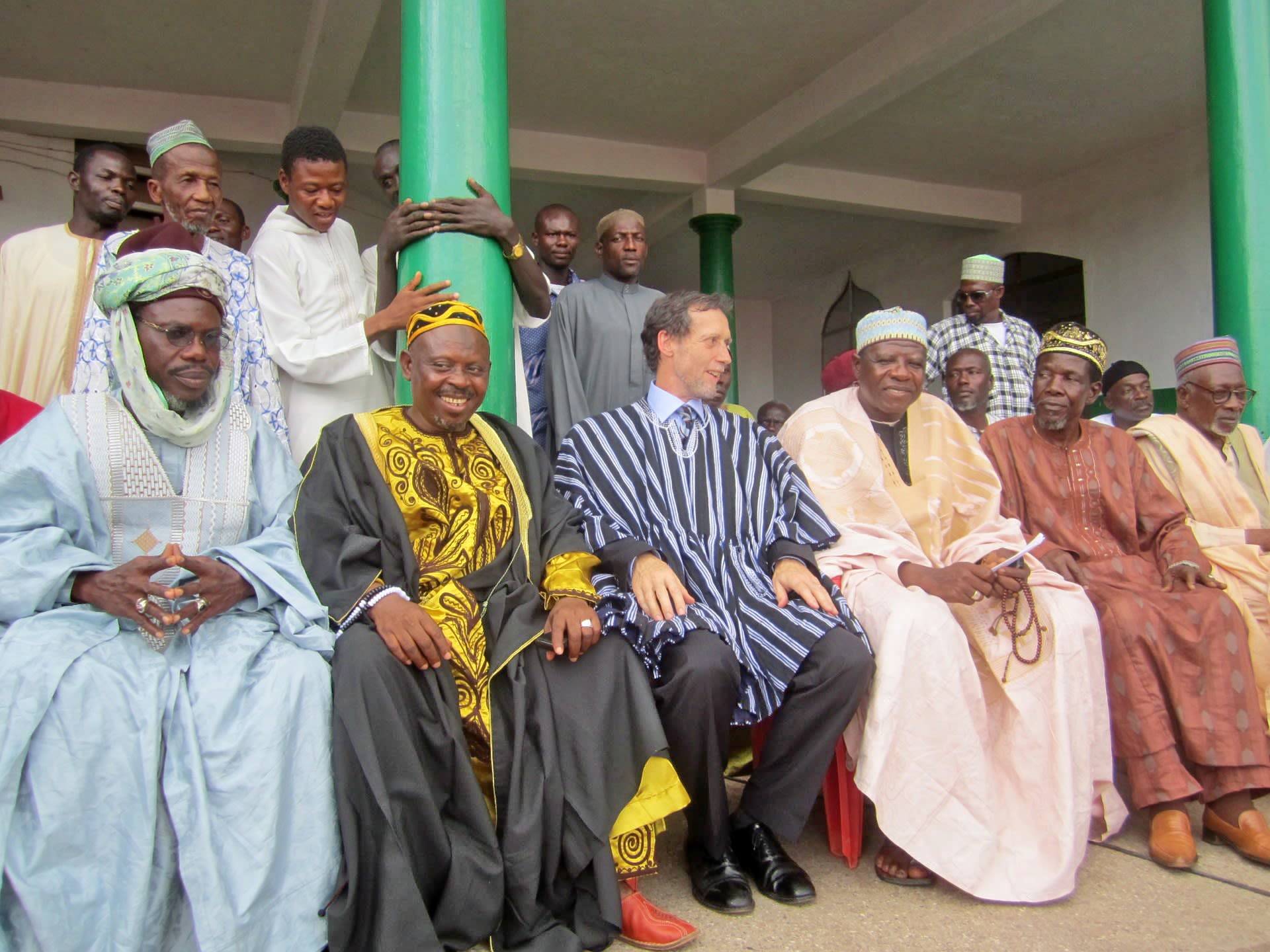
Professor Westcott in Kumasi (Ghana)
Professor Westcott in Kumasi (Ghana)
Suggested readings
Nicholas Westcott, How to be a diplomat (Taylor & Francis, 2025)
Emma Crewe, An Anthropology of Parliaments: Entanglements in Democratic Politics (Routledge, 2021)
Hartmut Rosa, Resonance: A Sociology of Our Relationship to the World (Polity, 2019)
Tom Fletcher, Naked Diplomacy: Power and Statecraft in the Digital Age (Collins, 2016)
Robert Cooper, The Ambassadors: Thinking about Diplomacy from Machiavelli to Modern Times (Weidenfeld & Nicolson, 2021)
Keep reading
Maro Itoje: lifting others, from the line-out to the classroom
England and British & Irish Lions captain Maro Itoje studied Politics at SOAS while starting his professional rugby career. He talks about his experience at SOAS, his philanthropic projects in the UK and in Lagos and the three things he believes every leader needs to earn trust.
From Pyongyang to Brasília: three SOAS alumni on life as a diplomat
What does diplomatic work really look like, and how do diplomats build trust between countries? A British ambassador, an American diplomat in Manila and Britain’s first representative to North Korea share the stories behind the headlines and what they learnt at SOAS.
Take part: volunteering, networking and scholarships
There are many ways to take part in the SOAS alumni community. Wherever you are in the world and whatever stage of your career you’re at, you can stay connected, share your experience and help shape the future of SOAS and its students.
 Built with Shorthand